Decoding Regional Tax Structures Shaping Profit Margins for Endurance Event Wagers Worldwide

Regional tax structures create distinct frameworks that operators must navigate when handling wagers on endurance events such as marathons, triathlons, and ultra-distance races, and these frameworks determine the final profit margins available after regulatory deductions take effect. Different jurisdictions apply taxes at operator or player levels, while some combine both approaches, and the resulting calculations shift dramatically depending on location and event type.
European Variations in Betting Taxation
Countries across Europe impose a range of tax models on sports betting activity, and endurance events fall under these same rules even though they attract niche participant pools compared to team sports. France applies a tax on gross gaming revenue at rates that differ by product category, whereas Italy uses a system tied to turnover with additional regional levies layered on top. Spain introduced updated digital gaming taxes in recent years that cover online platforms offering wagers on long-distance cycling and running competitions, and operators adjust payout structures accordingly to maintain viability.
Data from mid-2026 shows continued alignment between these national systems and EU-wide reporting requirements, yet individual member states retain flexibility in setting exact percentages that affect margin calculations for specialized markets like endurance betting.
North American Approaches and Operator Adjustments
Canadian provinces maintain separate regulatory regimes that tax betting operators on revenue generated from platforms licensed within their borders, and this setup influences how international firms structure endurance event offerings for local users. Several U.S. states have established frameworks since legalization expansions, with some applying taxes directly on adjusted gross revenue while others incorporate additional fees tied to licensing renewals. Operators active in these markets report that endurance wagers, which often feature lower handle volumes than mainstream sports, require precise margin modeling to absorb the combined state and federal obligations that apply.
Asia-Pacific and Australian Market Dynamics
Australia's taxation model places responsibilities on both operators and players in certain scenarios, with the Australian Taxation Office providing guidance on how winnings from betting activities integrate into overall tax filings. This approach differs from several Asian jurisdictions where operator-level taxes dominate and player winnings remain largely untouched at the point of payout. Endurance events hosted in Australia or drawing significant international interest therefore encounter margin pressures that combine federal requirements with state-based racing and betting levies.
Observers note that platforms serving these regions often recalibrate odds and promotional structures around endurance competitions to offset the cumulative tax load while remaining competitive against less regulated offshore alternatives.
Impact on Profit Margins for Niche Endurance Wagers
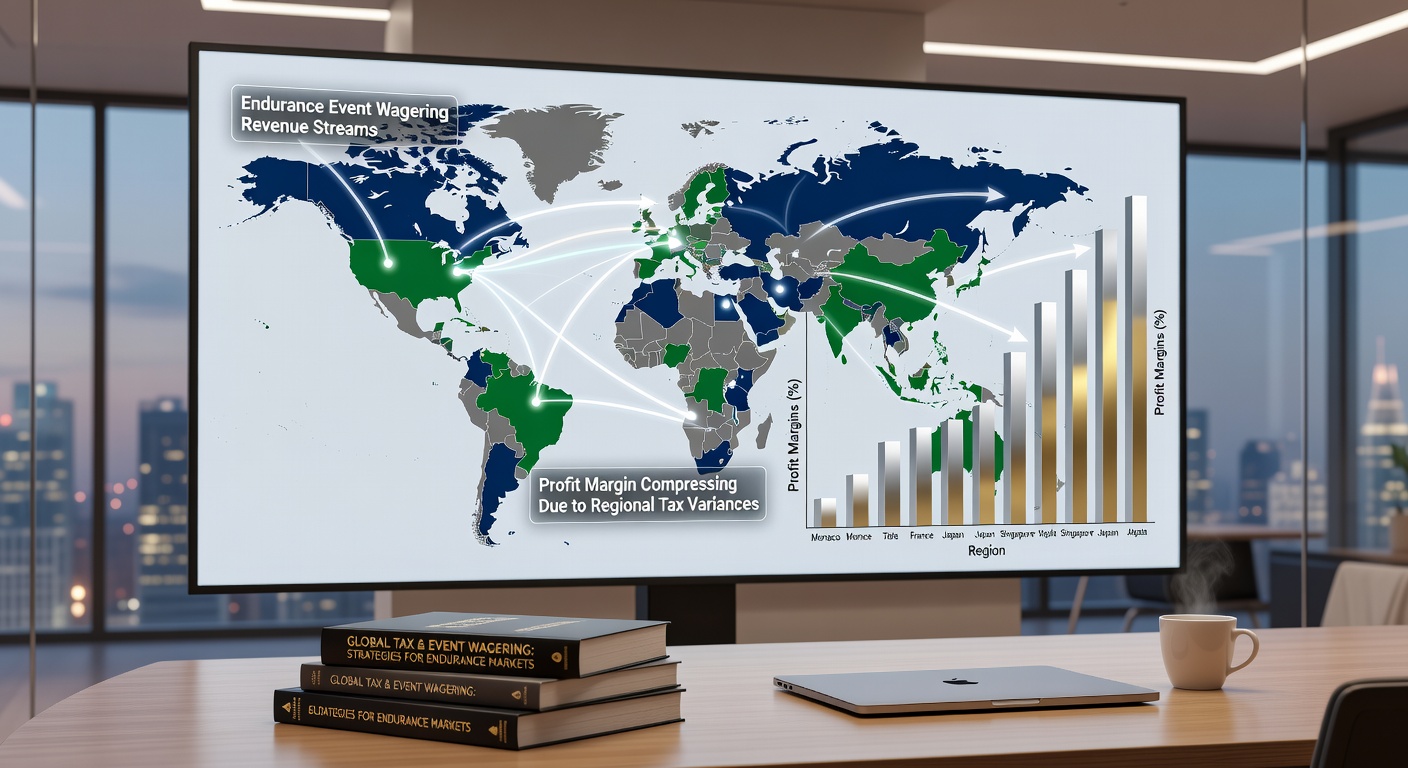
Endurance event wagers typically generate smaller total handles than high-profile team sports, yet they carry distinct risk profiles that interact with regional tax rates in measurable ways. Operators calculate margins by subtracting tax liabilities, platform costs, and risk reserves from the overall revenue pool, and higher tax environments compress the remaining percentage available for reinvestment or profit. In June 2026 several markets reported steady participation growth in ultra-endurance categories, which prompted some firms to refine their tax allocation models to preserve viability in higher-levy jurisdictions.
Those who study these patterns find that jurisdictions offering tax credits or reduced rates for emerging digital products sometimes attract more specialized endurance betting products, while stricter regimes see operators limit the depth of markets they offer on individual events.
Global Patterns Emerging in 2026
Cross-border operators increasingly rely on centralized compliance teams to track shifting tax obligations as new endurance events enter calendars worldwide, and this coordination helps maintain consistent margin targets despite local variations. Research from academic institutions tracking gaming economics indicates that tax structures exert stronger influence on low-volume categories such as endurance wagers than on mainstream offerings, because fixed compliance costs represent a larger share of overall revenue in smaller segments. Jurisdictions in South America and parts of Eastern Europe continue to refine their frameworks, often referencing models already tested in established markets to balance revenue collection with operator sustainability.
Conclusion
Tax structures across regions continue to shape how profit margins develop for endurance event wagers, and operators respond by adjusting market depth, pricing, and promotional strategies in line with local requirements. As participation in these events grows and digital platforms expand their reach, the interplay between taxation and margin management remains a central factor in determining which markets support robust offerings and which see more limited availability. Continued monitoring of regulatory updates through 2026 and beyond will clarify how these dynamics evolve across different geographic zones.